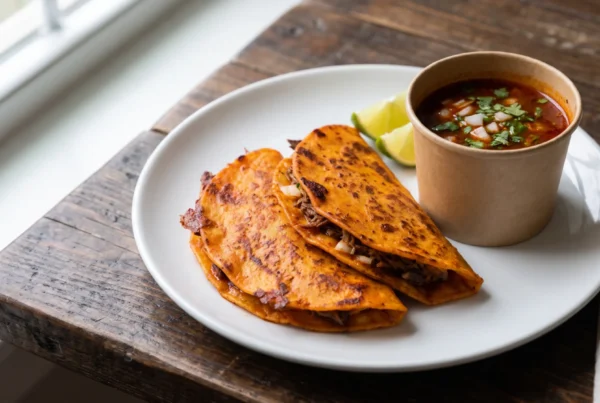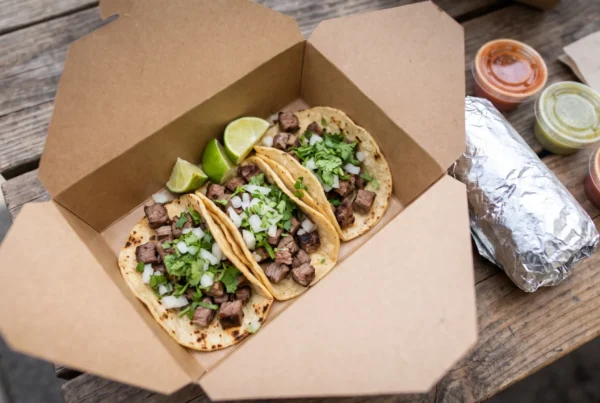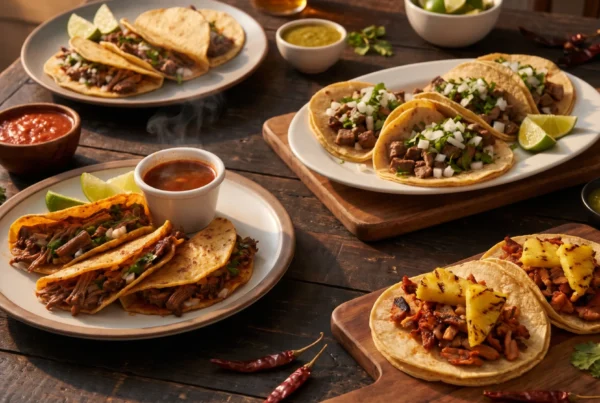
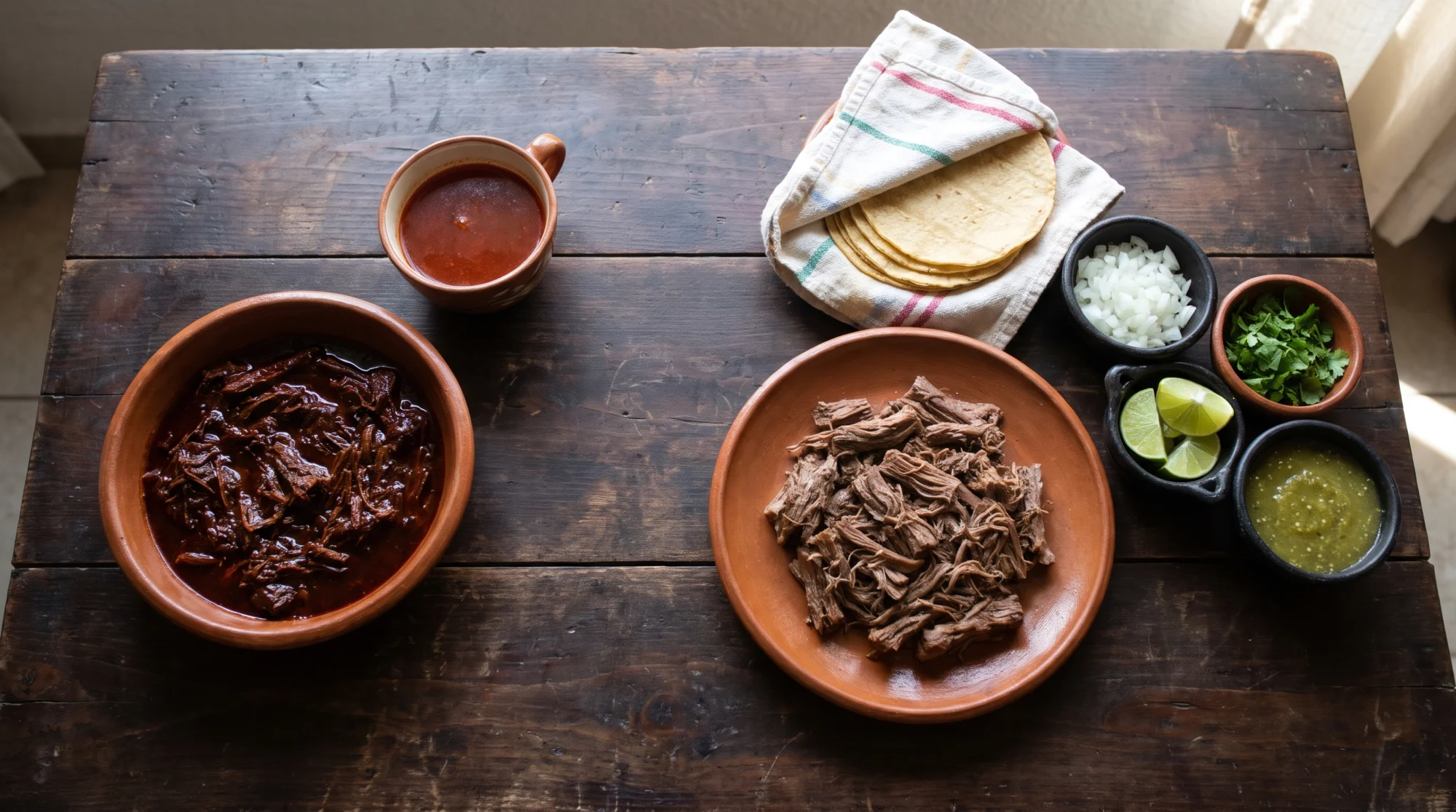
Birria vs barbacoa comes down to broth and chile: birria is meat marinated in a red adobo of dried chiles, vinegar and spices, then braised and served with its broth (consommé), while barbacoa is meat slow-cooked in a pit or steamer, traditionally wrapped in maguey leaves, for many hours (up to about 15 hours for a whole beef head cooked as barbacoa de cabeza). In practice, birria is tangier, redder and wetter, and barbacoa is milder, meatier and served with little or no sauce on the meat. The things that blur the line are region, the cut of meat, and how a particular kitchen cooks it, since both dishes are now often made with beef. If you want to taste the birria side of the comparison, our Tacos del Barrio menu lists birria tacos, quesabirria, a birria bowl and a birria burrito at all three New York locations.
Birria vs barbacoa at a glance
- Birria: associated with Jalisco and western Mexico; meat marinated in a dried-chile adobo with vinegar, garlic and spices such as cumin, bay leaf and thyme, then cooked in a broth.
- Barbacoa: the Mexican name for pit or earth-oven cooking; meat traditionally wrapped in maguey (agave) leaves and cooked underground, or today often steamed until tender.
- Traditional meats: goat, lamb or mutton for both in many regions; beef is now common for both, and barbacoa de cabeza uses a whole beef head.
- Broth: birria is served with its consommé for sipping or dipping. Some regional barbacoa comes with a broth made from drippings, but the meat itself is served without a red sauce.
- Flavor: birria is chile-forward with a tangy edge from vinegar; barbacoa tastes mostly of the meat, fat and whatever leaves or seasoning it was cooked with.
- At Tacos del Barrio: a Birria Taco order is 3 tacos with an 8 oz cup of consommé for $16.95. Barbacoa is not on the menu (website and all three official ordering pages checked November 4, 2026).
Quick definitions
- Adobo: a marinade or paste, here made from rehydrated dried chiles, vinegar, garlic and spices.
- Consommé: the seasoned cooking broth from birria, served in a cup next to the tacos.
- Maguey: the agave plant; its thick leaves (pencas) are used to wrap meat for pit barbacoa.
- Barbacoa de cabeza: barbacoa made from a whole beef head, including cheek and tongue.
- Quesabirria: birria folded into a tortilla with melted cheese and griddled, usually served with consommé.
- Carnitas: pork simmered and then crisped in lard or its own fat, a third slow-cooked meat that often comes up in this comparison.
These are general descriptions of two traditions that vary a lot from town to town and cook to cook. A birria from one family in Jalisco can taste quite different from a Tijuana-style beef birria in a New York taco shop, and “barbacoa” on a menu in Texas may mean steamed beef cheek rather than anything cooked in the ground. One accuracy caution: Tacos del Barrio’s menu describes what comes with each birria item but doesn’t publish its recipe, cut of meat or tortilla type, so this guide doesn’t guess at them. Ask the restaurant if a detail matters to you.
Key takeaways
- Birria started as a regional name for a kind of barbacoa in Jalisco, so the two are related, but today they’re usually treated as different dishes.
- The fastest tell at the table is a cup of red broth: birria almost always comes with consommé for dipping.
- Birria tastes of dried chiles and vinegar; barbacoa tastes mainly of slow-cooked meat and fat.
- Both are now often made with beef, so the meat alone won’t tell you which one you’re eating.
- Carnitas is the pork member of the slow-cooked family and is cooked in fat rather than broth or steam.
- Tacos del Barrio serves birria in four formats, priced $15.95 to $17.50 on the official menu, and does not list barbacoa.
In this guide: The difference · Side by side · How to tell them apart · Origins · How each is cooked · Taste · Meat and cuts · Birria vs barbacoa vs carnitas · Types of birria · Spice · Using barbacoa for birria · Which is healthier · Which to order · Birria at Tacos del Barrio · FAQ
What is the difference between birria and barbacoa?
The main difference is that birria is braised in a red chile adobo and served with its broth, while barbacoa is cooked low and slow in a pit or steamer with very little added liquid and no red sauce. Everything else (the meat, the region, the toppings) follows from those two different ways of cooking.
Barbacoa is the older and broader idea. In Mexico the word describes the indigenous method of cooking meat in a hole in the ground lined with hot stones and covered with maguey leaves, and over time it came to include meat steamed until tender in a pot or steamer. The result is soft, rich and fatty meat that’s usually served with onion and cilantro and eaten in tacos.
Birria took a different path. In Jalisco and the surrounding states, “birria” was originally the local name for barbacoa, but the dish evolved around a marinade of dried chiles, vinegar, garlic and spices and a long cook in broth. That broth, the consommé, became part of the dish itself. Today, especially in the United States, people treat birria as its own thing, and the word on a menu almost always means chile-braised meat with a cup of broth on the side.
The short version most people find useful: birria is the soupy, red, tangy one, and barbacoa is the tender, meat-forward one without a sauce. For a longer look at the birria side, including pronunciation and the stew-to-taco history, our guide to what birria is and how it’s made goes deeper.
Birria vs barbacoa side by side
Birria and barbacoa differ on six practical points: origin, traditional meat, cooking method, liquid, flavor and how they’re served. The table below sums up the general traditions. Individual cooks break these rules all the time, so treat each row as typical rather than fixed.
| Point of comparison | Birria | Barbacoa |
|---|---|---|
| Where it’s from | Jalisco and neighboring western states such as Michoacán, Zacatecas, Aguascalientes and Colima | Throughout Mexico, with well-known central Mexican traditions in Hidalgo’s Mezquital and Apan valleys |
| What the word means | The regional name in and around Jalisco for a style of barbacoa | Pit or earth-oven cooking; the word is usually traced to the Taíno language of the Caribbean |
| Traditional meat | Goat, lamb or mutton | Lamb or mutton, goat, and beef, including the whole beef head |
| Common meat today | Beef is widespread, especially in Tijuana-style tacos | Beef, often cheek or head meat, is common in many places |
| Cooking method | Marinated in adobo, then braised or stewed in broth | Wrapped in leaves and pit-cooked, or steamed until tender |
| Liquid | A lot: the meat cooks in broth that becomes consommé | Little on the meat; some regional styles collect drippings for a separate broth |
| Main flavors | Dried chile, vinegar tang, garlic, warm spices | Rich meat and fat, plus the leaves or light seasoning it was cooked with |
| Color | Deep red to rusty brown | Brown to grayish brown, without a red coating |
| Typical serving | Stew in a bowl, or tacos with a cup of consommé for dipping | Tacos with onion, cilantro and salsa, or by weight with tortillas |
| Popular spin-offs | Quesabirria, birria bowls and burritos, birria ramen | Barbacoa tacos and burritos, barbacoa de cabeza tacos |
Notice how the two columns overlap on meat. Because beef is now so common for both in the United States, the animal won’t settle the question, and the broth and the chile are the better clues.
How can you tell birria and barbacoa apart when you order?
You can tell them apart by looking for a cup of red broth, checking the color of the meat, and noticing whether the tortillas look stained red from being dipped. Here are the clues in the order you’re likely to notice them:
- Is there a cup of broth? Birria tacos nearly always arrive with consommé. Barbacoa tacos usually don’t come with a dipping broth, though some regional barbacoa is sold with a cup of soup on the side.
- What color is the meat? Birria is coated in a red or brick-colored sauce. Barbacoa is brown and glossy from its own fat, with no red layer.
- Is the meat wet or dry? Birria is juicy and saucy enough to drip. Barbacoa is moist and tender but you won’t find a pool of sauce on the plate.
- Are the tortillas red? Many birria tacos are made with tortillas dipped in the fat from the top of the broth and crisped on a griddle, which turns them orange-red. Barbacoa tacos are usually served in plain warm tortillas.
- What does it smell like? Birria smells of toasted chile and a little vinegar. Barbacoa smells mostly of rich roasted or steamed meat.
- Is there cheese? If it’s griddled with melted cheese and called quesa-something, it’s almost certainly birria.
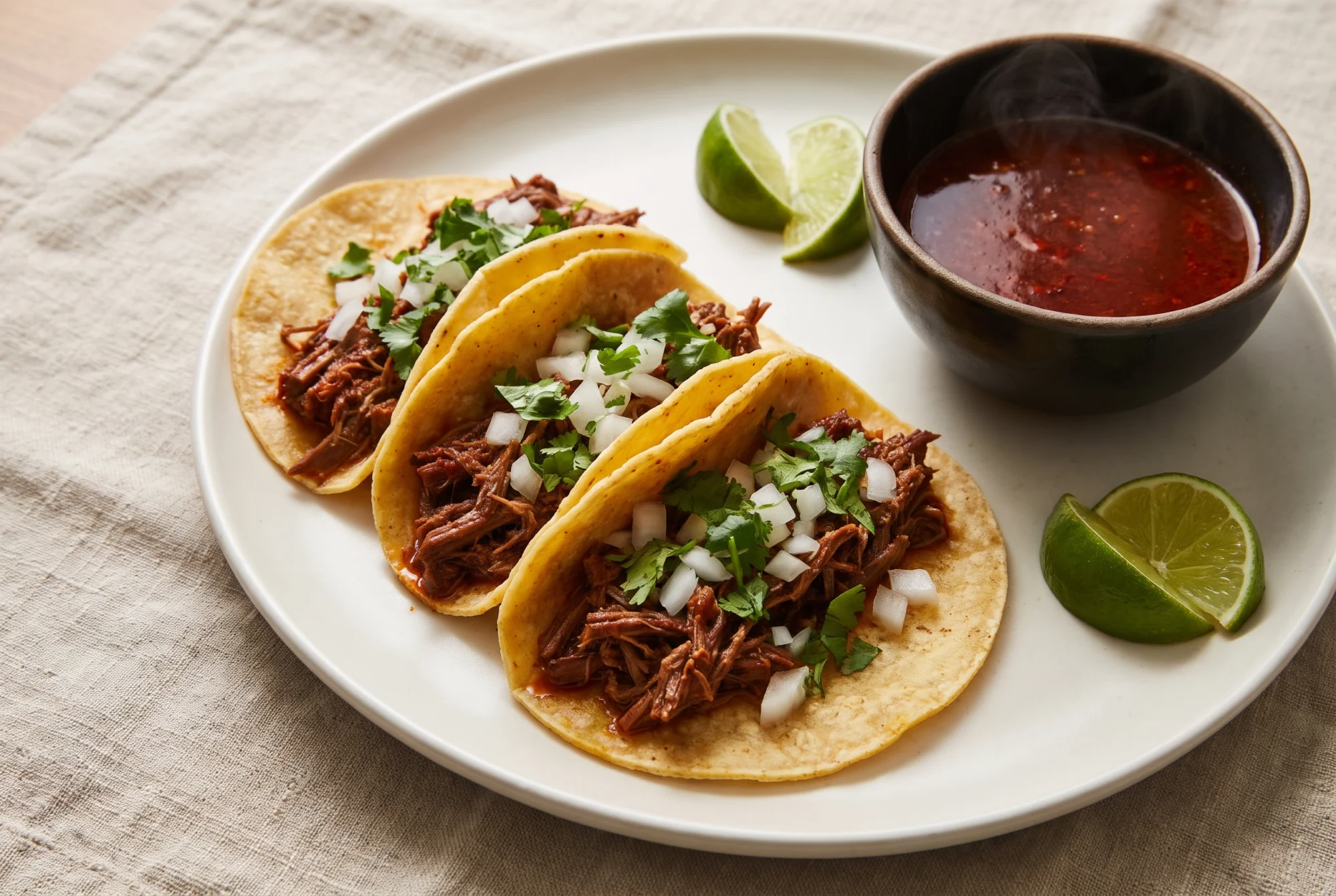
At Tacos del Barrio the menu makes this simple, since every taco-style birria item lists its consommé. The Birria Taco order includes 3 tacos and an 8 oz cup of consommé, and the Quesabirria includes an order of 3 with crema and pico de gallo on the side plus the same 8 oz of consommé. If you are new to the dip-and-sip routine, see how to eat birria tacos with consommé.
Where do birria and barbacoa come from?
Barbacoa comes from the ancient pit-cooking traditions found across Mexico, and birria comes from Jalisco in western Mexico, where it began as the local name for one style of barbacoa. The two stories are tangled together, which is why the question “is birria just barbacoa?” keeps coming up.
The word “barbacoa”
Most scholars trace the word barbacoa to the Taíno language of the Caribbean, where it described a framework of sticks, such as a raised wooden grill or platform. In Mexico, Spanish speakers applied the word to the earth ovens that Indigenous cooks were already using, and the cooking method had its own names in local languages long before that. Cooks dug a pit sized to the meat, heated it with fire and stones, lined it with maguey, banana or corn leaves, wrapped the food, covered it with earth and let it cook slowly, often overnight.
Before the Spanish arrived, turkey, deer, rabbit, fish and other foods went into these pits. Afterward, mutton, beef, pork and goat became the usual meats. Barbacoa turned into a dish for countryside celebrations and market days, and nineteenth-century writers described it being sold ready-cooked in city markets because preparing it at home was so much work. If you want to read more, the Wikipedia article on barbacoa collects the history and regional styles with sources.
Birria in Jalisco
Birria grew up in Jalisco and nearby states, where it was served at weddings, baptisms, holidays and other big gatherings. Mexican writers in the twentieth century described it as the Jalisco name for barbacoa, and one 1985 definition called it a “soupy barbacoa” from Guadalajara made with lamb or goat. That soupiness is what sets it apart. Instead of relying on the pit alone, birria cooks leaned on a chile-and-vinegar marinade and a broth that soaked up the flavor.
There are folk stories about the name, including one that says Spanish colonists called the goat dish “birria,” meaning something like worthless, but historians treat those as legends rather than settled fact. The Wikipedia article on birria lays out the competing explanations.
How birria became its own dish
The modern birria taco took shape in Tijuana. In 1950 a taquero named Guadalupe Zárate opened a stand there, started making birria with beef because it was cheaper and less fatty than goat, and added more liquid at a customer’s suggestion. That beef birria with consommé spread through northern Mexico and into the United States, and in the 2010s quesabirria made birria tacos popular across North America. By then most diners outside Jalisco knew birria as a red, dippable taco and had no idea it had ever been called barbacoa.
How is each one cooked?
Birria is marinated in a chile adobo and then braised in liquid, while barbacoa is wrapped and cooked by slow, moist heat with little added liquid. Both take hours, and both turn tough, collagen-rich cuts into meat soft enough to pull apart with a fork.
How birria is made
Recipes differ from family to family, but the general method looks like this:
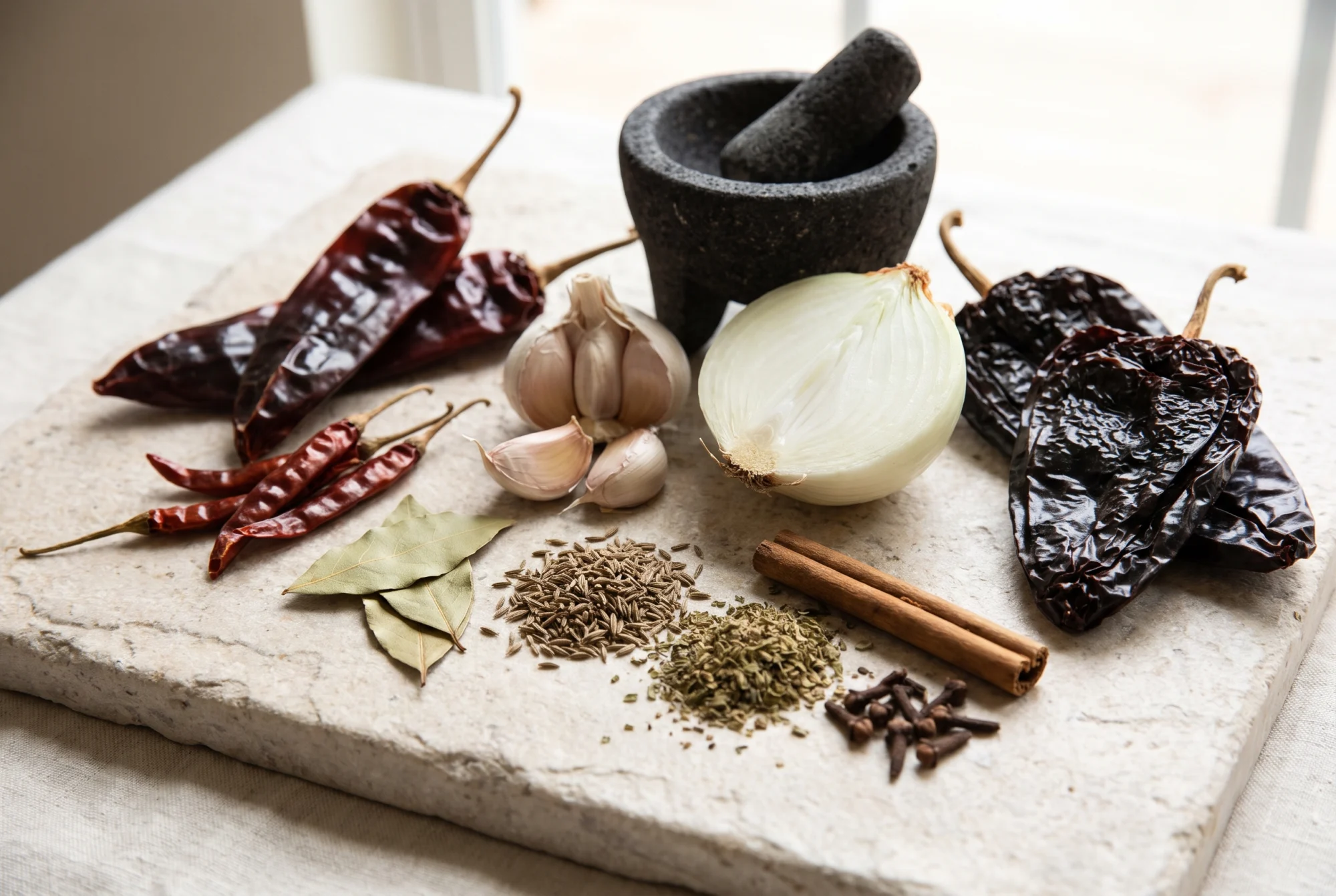
- Dried chiles such as guajillo and ancho are toasted lightly, soaked until soft and blended with vinegar, garlic, onion and spices. Cumin, bay leaf, thyme, oregano, cinnamon and clove all show up in common versions.
- The meat is coated in that adobo and often left to marinate for hours or overnight.
- It goes into a pot or roasting pan with water or stock and cooks low and slow until it falls apart.
- The meat comes out and gets shredded. The liquid is skimmed, seasoned and strained into consommé, and the red fat from the top is often saved for dipping and griddling tortillas.
Some cooks also char or roast the meat at the end, a style sometimes called birria tatemada, and in parts of Jalisco birria is still cooked in a covered oven or pit. The common thread is the adobo and the broth.
How barbacoa is made
Traditional barbacoa starts with a pit. A fire heats stones at the bottom, the pit is lined with roasted maguey leaves, and the seasoned meat goes in wrapped in more leaves. In parts of central Mexico, cooks set a pot under the meat to catch the drippings, sometimes with chickpeas, vegetables and chile, so the juices turn into a broth served separately. The pit is sealed with earth and the meat cooks for many hours, often overnight. A whole beef head cooked as barbacoa de cabeza can stay in the earth oven for up to about 15 hours.
Most restaurant kitchens can’t dig a pit, so modern barbacoa is usually steamed or slow-cooked in a covered pot, sometimes with banana leaves or a little liquid for moisture. The seasoning tends to be simple: salt, garlic, onion, bay leaf, maybe cumin or a little chile. The meat is shredded or chopped and served with its own juices rather than a sauce.
The two methods compared
| Step | Birria | Barbacoa |
|---|---|---|
| Seasoning | Thick adobo of dried chiles, vinegar, garlic and spices | Light rub of salt, garlic, onion and herbs, sometimes a little chile |
| Marinating | Common, often overnight | Optional and usually short |
| Heat source | Stovetop pot, oven, or a covered pit in some regions | Earth oven traditionally; steamer or covered pot today |
| Liquid | Meat sits in broth | Meat steams above or beside its drippings |
| Wrapping | Usually none | Maguey, banana or corn leaves |
| What comes out | Shredded meat plus consommé and red fat | Tender shredded or chopped meat and its juices |
Does beef barbacoa taste like birria?
No, beef barbacoa doesn’t taste much like birria even when it’s made from the same cut. Birria tastes of dried chile, garlic and warm spices with a tangy edge from vinegar, while barbacoa tastes mainly of the beef itself: rich, a little gamey if it’s head meat, and soft with rendered fat.
With birria, the sauce is half the experience, and dipping the taco into consommé adds even more of that chile flavor. With barbacoa, the meat is the point, and the flavor comes from salsa and toppings you add at the table. Fans of barbacoa often reach for a sharp green salsa, onion and lime to cut the richness. Birria already has its own seasoning built in, so toppings tend to be simpler, usually onion and cilantro.
| Taste and texture | Birria | Barbacoa |
|---|---|---|
| First impression | Savory chile and spice | Rich, beefy or lamby meat |
| Acidity | Noticeable tang from vinegar | Low unless you add salsa or lime |
| Heat | Usually mild to medium, depends on the chiles | Usually mild |
| Texture | Juicy, saucy shreds | Very soft, sometimes gelatinous with cheek or head meat |
| Best partner | A cup of consommé | Salsa, onion, cilantro and lime |
What meat is used in birria and barbacoa?
Birria is traditionally made with goat, lamb or mutton and is now very often made with beef, while barbacoa is made with lamb, mutton, goat or beef depending on the region, with beef cheek and whole beef head especially common. Both favor tough, well-worked cuts with plenty of connective tissue, because long, slow cooking melts that collagen into tender meat.
| Meat | In birria | In barbacoa |
|---|---|---|
| Goat (chivo) | The classic Jalisco choice, birria de chivo | Used in some regions |
| Lamb or mutton (borrego) | Traditional in some versions | Classic in central Mexico, especially Hidalgo |
| Beef (res) | Common today; chuck, shank and short rib are popular in home recipes | Very common; cheek (cachete), tongue (lengua) and head (cabeza) |
| Chicken | Some modern restaurants and home cooks make chicken birria | Rare |
| Pork | Not typical | Some regional pit-cooked pork dishes are related, such as cochinita pibil in Yucatán |
One thing to keep in mind: menus often just say “birria” or “barbacoa” without naming the animal or cut. Tacos del Barrio’s menu and ordering pages don’t state which meat its birria uses, so if you need to know (for a dietary reason or just curiosity), ask the restaurant directly before you order.
Is birria a type of barbacoa?
Historically, yes. Birria began as the Jalisco name for a regional style of barbacoa, and some food historians still describe it that way. In everyday use, though, especially in the United States, birria and barbacoa are separate dishes: birria means chile-braised meat with consommé, and barbacoa means slow-steamed or pit-cooked meat without the red broth.
So both answers you’ll hear online are partly right. If someone tells you birria is “just barbacoa,” they’re talking about history and family trees. If someone tells you they’re completely different, they’re talking about what shows up on your plate in 2026. For ordering, the modern meaning is the useful one.
Birria vs barbacoa vs carnitas: what’s the difference?
Birria is braised in chile broth, barbacoa is slow-steamed or pit-cooked, and carnitas is pork simmered in fat and then crisped. All three are slow-cooked Mexican meats that end up shredded or chopped for tacos, which is why they’re so often compared.
Carnitas, which means “little meats,” is made by cooking well-marbled pork, usually shoulder, in lard or its own fat over low heat until tender, then turning up the heat so the edges brown and crisp. It’s widely associated with Michoacán, and historical cookbooks link it to an older French method of cooking pork in fat. The Wikipedia article on carnitas covers that background.
| Dish | Usual meat | Cooking medium | Flavor | Texture | Served with |
|---|---|---|---|---|---|
| Birria | Goat, lamb or beef | Chile adobo and broth | Chile, spice, vinegar tang | Juicy and saucy | Consommé, onion, cilantro, lime |
| Barbacoa | Lamb, goat or beef cheek and head | Steam or pit heat, little liquid | Rich and meat-forward | Very soft | Salsa, onion, cilantro, lime |
| Carnitas | Pork shoulder | Lard or its own fat | Porky, savory, lightly caramelized | Tender with crisp edges | Salsa, onion, cilantro, guacamole |
Carnitas suits anyone who likes crispy edges, birria is the pick when you want something saucy to dip, and barbacoa is closest to plain slow-cooked meat. Tacos del Barrio’s menu doesn’t list carnitas or barbacoa, but it does have another pork taco, the Al Pastor (marinated pork) taco, alongside birria and grilled options like the Carne Asada (steak) taco.
What are the two types of birria?
The two best-known types of birria are birria de chivo, made with goat, and birria de res, made with beef. Birria de chivo is the older Jalisco tradition, and birria de res is the version that spread from Tijuana and now dominates taco menus in the United States.
Beyond those two, you’ll find lamb birria (birria de borrego), chicken birria in some modern kitchens, and a range of serving styles: birria en caldo served as a stew in a bowl, tacos de birria with consommé, quesabirria with melted cheese, and newer spin-offs like birria ramen. Neighboring states such as Zacatecas, Aguascalientes and Colima have their own regional variations too. Our guide to birria tacos in NYC walks through the taco formats in more detail.
Is birria spicier than barbacoa?
Birria is usually more chile-forward than barbacoa, but it isn’t necessarily hot. Many birria adobos lean on guajillo and ancho chiles, which bring deep color and flavor with mild to moderate heat, and the cook decides how many hotter chiles to add. Barbacoa is typically mild on its own, and most of its heat comes from whatever salsa you spoon on top.
If you’re sensitive to spice, start with a little of the consommé before dunking the whole taco, and add hot sauce yourself rather than assuming. At Tacos del Barrio, sauces such as Salsa Roja, Cilantro Jalapeño and Chipotle Crema are listed separately in the sauces section of the menu for $0.75 each, so you can control how much you add. The menu doesn’t rate the heat of its birria, so ask if you want a sense of it before ordering.
Can you use barbacoa to make birria?
You can use leftover barbacoa in birria-style tacos, but it won’t taste like true birria unless you add the chile adobo and broth. Barbacoa meat is already cooked without that red marinade, so the flavor that makes birria recognizable isn’t in it.
Home cooks who try it usually simmer the shredded barbacoa briefly in a chile broth so it picks up color and flavor, then use the broth for dipping. It’s a reasonable shortcut for using up leftovers, though the meat only takes on the sauce at the surface. Going the other direction, leftover birria isn’t a good stand-in for barbacoa, because you can’t take the chile back out. If you’re reheating leftovers of either, the FDA’s safe food handling guidance covers refrigeration and reheating basics.
Which is healthier, birria or barbacoa?
Neither one is automatically healthier, because it depends on the cut of meat, how much fat stays in the dish, and what you eat with it. Barbacoa made from cheek or head meat can be quite rich, and birria’s consommé and dipped, griddled tortillas add fat and salt, while a bowl of either with plenty of onion and cilantro is a different meal from cheesy griddled tacos.
A few practical levers matter more than the dish name. Leaner cuts make a lighter result. Skimming the fat from birria broth, or not dipping every tortilla in it, cuts richness. Cheese in quesabirria adds more. Tacos del Barrio doesn’t publish nutrition or calorie information, so this guide doesn’t estimate it. If you’re following a specific diet, read each item’s listed components (the Birria Bowl, for example, lists rice, beans, cheese, crema, lettuce, avocado sauce and pico de gallo) and decide what fits.
For allergies or dietary restrictions, the name of a dish won’t tell you enough. Neither birria nor barbacoa is automatically gluten-free, dairy-free or halal, and restaurant kitchens can share griddles, fryers and prep areas. Tacos del Barrio’s menu doesn’t label items with those claims, so call the location you’re ordering from before you order if you have an allergy.
Should you order birria or barbacoa?
Order birria if you want bold chile flavor and a broth for dipping, and order barbacoa if you want tender, mild, meat-forward tacos that you season yourself. Both are good choices; it comes down to what you’re in the mood for and how you’re eating.
| If you want… | Lean toward | Why |
|---|---|---|
| A saucy taco you can dunk | Birria | It comes with consommé built for dipping |
| Melted cheese | Birria (quesabirria) | Quesabirria is the cheesy, griddled version |
| The plainest taste of slow-cooked meat | Barbacoa | Light seasoning lets the meat lead |
| Something mild | Barbacoa, or birria with less consommé | Barbacoa’s heat mostly comes from the salsa you add |
| A meal that travels well to a desk | A birria bowl or burrito | No broth cup to balance; everything is in one container |
| A cold-weather meal | Birria | A cup of hot broth on a New York winter day is hard to argue with |
| Feeding a crowd | Either, as part of a taco spread | Shredded meats hold well and are easy to serve |
One practical note for takeout: dipping tacos are best eaten right away, while bowls and burritos hold up better on a commute. Our Financial District lunch guide has more on choosing dishes that travel.
Where can you get birria at Tacos del Barrio?
You can get birria at all three Tacos del Barrio locations in New York: Brooklyn at 67 ½ 6th Avenue, the Financial District at 71 Nassau Street, and the Times Square-branded location at 270 W 39th Street. Each location’s official ordering page lists the same four birria items at the same prices, checked November 4, 2026.
| Menu item | Menu price | What the menu says is included | Good for |
|---|---|---|---|
| Birria Taco | $16.95 | Order of 3 tacos and 8 oz consommé | Dipping, eating right away |
| Quesabirria | $17.50 | Order of 3 with crema and pico de gallo on the side, and 8 oz consommé | Cheese lovers |
| Birria Bowl | $15.95 | Rice, beans, cheese, crema, lettuce, avocado sauce and pico de gallo | A fork-friendly meal |
| Birria Burrito | $15.95 | Rice, beans, cheese, crema, avocado sauce and pico de gallo | Eating on the go |
These are menu prices. Sales tax, tips, and any delivery or service fees are added at checkout, and the website, the online ordering page and the counter may not always show identical prices, so confirm your total when you order. Barbacoa and carnitas don’t appear on the menu; if you’re curious about other slow-cooked or grilled options, browse the full taco lineup or the bowls.
Pick the location closest to you:
- Tacos del Barrio Brooklyn, 67 ½ 6th Avenue, Brooklyn, NY 11217. Phone (718) 975-0065.
- Tacos del Barrio Financial District, 71 Nassau Street, New York, NY 10038. Phone (917) 805-3104.
- Tacos del Barrio Times Square, 270 W 39th Street (between Seventh and Eighth Avenues), New York. Phone (917) 805-0507. If you’re spending the day in Midtown, our guide to eating near Bryant Park covers that area.
The homepage says Tacos del Barrio delivers within a 5-mile radius of any location; enter your address on the ordering page to confirm. For a party or office lunch, the Tacos del Barrio catering page lists per-person taco combos for groups, and our guide to how many tacos per person to order helps with headcounts.
Birria vs barbacoa FAQ
What is the main difference between birria and barbacoa?
Birria is meat marinated in a red chile adobo and braised in broth, served with that broth as consommé. Barbacoa is meat slow-cooked in a pit or steamer with little liquid and no red sauce, so it tastes mainly of the meat.
Is birria the same as barbacoa?
Not today. Birria began as the Jalisco name for a regional style of barbacoa, but modern birria is defined by its chile adobo and consommé, while barbacoa is pit-cooked or steamed meat without that red broth.
Is birria beef the same as barbacoa beef?
The cut can be similar, but the cooking isn’t. Birria beef is marinated in chiles and vinegar and braised in broth, while barbacoa beef, often cheek or head meat, is steamed or pit-cooked with simple seasoning.
Does beef barbacoa taste like birria?
No. Birria tastes of dried chile, spice and vinegar, while beef barbacoa is milder and tastes mostly of rich, slow-cooked beef. Barbacoa gets most of its extra flavor from the salsa you add.
Which is spicier, birria or barbacoa?
Birria is usually more chile-forward, but it’s often only mild to medium in heat because the main chiles, such as guajillo and ancho, are not very hot. Barbacoa is mild unless you add a hot salsa.
What meat is traditionally used for birria?
Goat is the classic choice in Jalisco, with lamb and mutton also traditional. Beef is now the most common meat for birria tacos in the United States.
What meat is barbacoa made from?
Barbacoa can be lamb, mutton, goat or beef depending on the region. Beef cheek, tongue and whole beef head (barbacoa de cabeza) are especially common in many places.
What does barbacoa mean in English?
Barbacoa refers to pit or earth-oven cooking in Mexico. The word is usually traced to the Taíno language, where it described a framework of sticks, and it’s related to the English word barbecue.
Where is birria from?
Birria comes from Jalisco in western Mexico, and nearby states such as Michoacán, Zacatecas, Aguascalientes and Colima have their own versions. The beef birria taco with consommé developed in Tijuana.
Where is barbacoa from?
Barbacoa comes from pit-cooking traditions found across Mexico. Central Mexico, especially Hidalgo, has some of the best-known lamb barbacoa traditions.
Can I use barbacoa to make birria tacos?
You can, but you’ll need to simmer the barbacoa in a chile broth so it takes on birria’s color and flavor. Without the adobo and consommé, it’s simply a barbacoa taco.
What are the two types of birria?
The two main types are birria de chivo, made with goat, and birria de res, made with beef. Lamb and chicken versions also exist.
What is the difference between birria, barbacoa and carnitas?
Birria is braised in chile broth, barbacoa is steamed or pit-cooked, and carnitas is pork cooked in lard or its own fat until tender and then crisped. Carnitas is traditionally pork, while birria and barbacoa are usually goat, lamb or beef.
Is birria healthier than barbacoa?
Neither is automatically healthier. It depends on the cut, how much fat stays in the broth or meat, and extras like cheese and griddled tortillas. Tacos del Barrio doesn’t publish nutrition information.
Why is birria served with consommé?
Birria is cooked in broth, and that seasoned broth is served alongside so you can sip it or dip the tacos in it. In Tijuana, adding more liquid to beef birria is what turned the consommé into a standard part of the dish.
Does Tacos del Barrio serve barbacoa?
No. Barbacoa isn’t listed on the Tacos del Barrio website menu or on the official ordering pages for its three locations, checked November 4, 2026. The menu does list birria tacos, quesabirria, a birria bowl and a birria burrito.
How much are birria tacos at Tacos del Barrio?
A Birria Taco order is $16.95 for 3 tacos and an 8 oz consommé, and Quesabirria is $17.50 for an order of 3 with consommé, before tax, tip and any fees. Prices can change, so check the ordering page.
What meat does Tacos del Barrio use for birria?
The menu and ordering pages don’t say. If you need to know the meat for a dietary reason, contact the location you’re ordering from before you order.
Order birria from Tacos del Barrio:
- Order from Brooklyn (67 ½ 6th Avenue)
- Order from the Financial District (71 Nassau Street)
- Order from Times Square (270 W 39th Street)
- Planning a group order? Start with the catering inquiry form.
Related reading
- What Is Birria? Meaning, Origin and How It’s Made
- Birria Tacos in NYC: What to Order, What It Costs and How to Eat Them
- How Many Tacos Per Person? A Catering Planner for NYC Office and Holiday Parties
- Lunch in the Financial District: A Fast, Affordable Guide Near Wall Street
Sources and dates
Menu facts come from the Tacos del Barrio website and the three official ordering pages, checked November 4, 2026. Historical background draws on the Wikipedia articles on barbacoa, birria and carnitas.